
Do you notice that some days you wake up too tired and keep snoozing the alarm, but then some other days you’re up and about before it even has the chance to ring? I’m sure that we’ve all been there during the week, just wondering and confused why our body suddenly decided to be so tired.
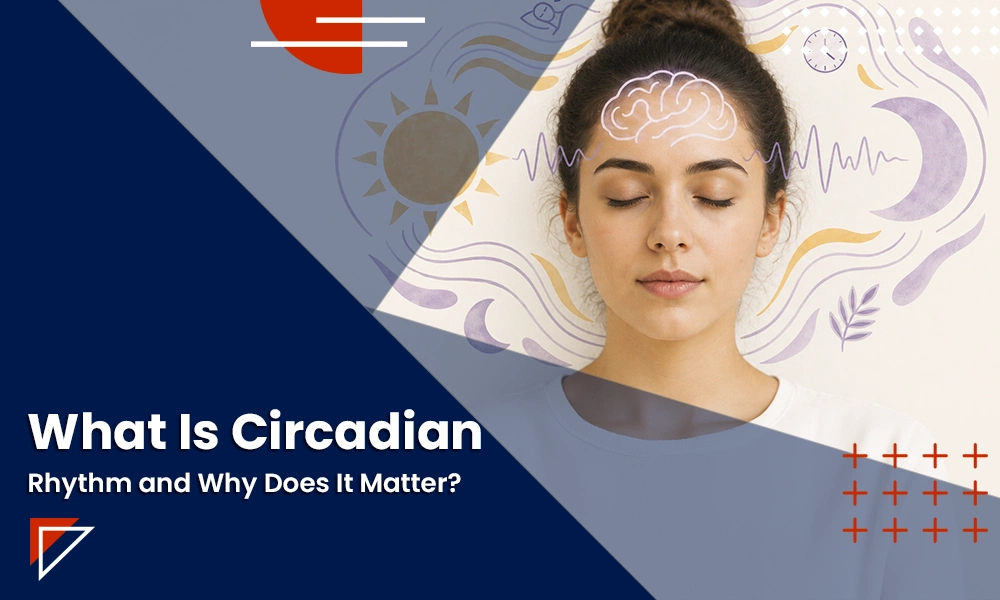
So there’s this internal clock thing running in basically every cell of the body, and most people never think about it until sleep goes sideways for a few weeks straight. That’s circadian rhythm, more or less. It’s the roughly 24-hour cycle that tells the body when to feel awake, when to feel sleepy, when to get hungry, and when hormones should rise or drop off.
Not exactly 24 hours either, but it’s closer to 24.2 hours in most humans, and light exposure resets it every day so it doesn’t drift off into its own schedule. Without that daily reset, the whole system would slowly slide later and later, which is actually what happens to people stuck in caves or bunkers without windows. Circadian rhythms need light. It’s almost dependent on light. We expand on how this circadian rhythm, aka our body clock, functions in the article below and talk about some pharmaceutical medications like Modaheal 100 mg or Armodacare 250 mg that people tend to use.
The Circadian clock isn’t just about sleep
People hear “circadian rhythm” and think melatonin, bedtime, maybe blackout curtains. Fair enough, sleep is the obvious symptom when things go wrong. But the rhythm also runs body temperature, digestion timing, blood pressure, and even how the liver processes certain things during the day versus at night.
There’s a master clock for all this, which sits in a part of the brain called the suprachiasmatic nucleus, which is a mouthful, so most articles just say SCN. The SCN takes cues from light hitting the eyes and basically conducts the rest of the body like an orchestra. Except the metaphor breaks down a bit because peripheral clocks in the liver and muscles and skin can drift independently if meal timing or activity gets weird enough. So it’s less “one clock” and more “one big clock bossing around a bunch of smaller ones that sometimes ignore it”.
Why shift workers and jet-lagged people get affected
This is where circadian rhythm actually matters in daily life, not just biology class trivia. Anyone who’s flown from New York to London and felt like a zombie for three days has experienced circadian misalignment. The internal clock says it’s 3am, the destination says it’s 9am, and the body just doesn’t agree.
Shift work is worse, honestly, because it’s not temporary. Night shift nurses, factory workers, and truck drivers, all of their circadian rhythms are constantly fighting the actual clock on the wall. Some studies link chronic shift work to a higher risk of metabolic issues, mood problems, and even certain cancers, though causation there gets murky and researchers still argue about it.
Healthcare providers sometimes prescribe wakefulness-promoting medication for people with diagnosed shift-work sleep disorder or narcolepsy, where the circadian rhythm and daily obligations are permanently out of sync in a way that lifestyle changes alone can’t fix. That’s a conversation to have with an actual physician, though, not something to self-manage off a blog post.
The role of Light in your Circadian rhythm
Morning sunlight, even on a cloudy day, is stronger than most indoor lighting by a wide margin. That’s part of why staring at a phone in bed doesn’t reset anything useful, the light’s too dim and too blue-heavy at the wrong time. Circadian rhythm cares less about screens specifically and more about intensity and timing of light exposure generally, but screens at 11pm are a convenient scapegoat because they’re everywhere.
Getting outside within the first hour of waking up supposedly helps anchor the rhythm. Supposedly. Some sleep researchers swear by it, others think it’s overstated and genetics play a bigger role than people want to admit. Probably both things are a little true.
The melatonin confusion
Melatonin doesn’t knock people out the way people think it does. It’s more of a signal that tells the body, “Hey, it’s getting dark, time to wind toward sleep” rather than acting like a sedative. Circadian rhythm and melatonin release are tightly linked, dark environments trigger it, and bright light suppresses it, and that’s why a lit-up bedroom can mess with falling asleep even if someone’s exhausted.
Taking melatonin supplements at the wrong time can actually shift the circadian rhythm in the wrong direction. Timing matters more than dose, which is not what the bottle label usually explains.
Chronotypes
Some people are wired to wake early and crash by 9pm, others come alive at midnight. Circadian rhythm isn’t identical for everyone, there’s a genetic component, sometimes called chronotype, early bird versus night owl, though it’s more of a spectrum than two boxes. Forcing a night owl into a 6am job is basically asking their circadian rhythm to fight itself every single day. That’s exhausting in a way that coffee doesn’t fully fix.
This is part of why “just go to bed earlier” advice falls flat for a lot of people. It’s not always a discipline problem. Sometimes the internal clock genuinely runs later, and the culture just isn’t built around that.
What actually throws off the body clock
Late nights, inconsistent wake times, alcohol close to bedtime, eating at random hours, too much light at night, and not enough light in the day. Travel across time zones. Long-term shift work. Even stress hormones can nudge circadian rhythms around because cortisol has its own daily pattern that’s supposed to peak in the morning and taper off.
Weekends make it worse too, ironically. Sleeping in on Saturday and Sunday, then trying to wake up early Monday, creates something researchers call social jet lag. Same mechanism as flying somewhere, just self-inflicted. In these situations, wakefulness stimulants like Modaheal 100 mg or Armodacare 250 mg are administered, which help an individual stay alert and more focused when they have to.
Final Thoughts
You must be wondering why a circadian rhythm is so important. It’s because a misaligned circadian rhythm doesn’t just make someone tired, it messes with mood, focus, appetite, blood sugar regulation, and immune function over time. It’s not dramatic day to day, more like slow erosion. People notice the tiredness first, and the rest creeps in later, and by then it’s hard to trace back to sleep timing at all.
Fixing it usually isn’t complicated in theory, mostly consistency, light exposure, and not eating at 2am. In practice it’s genuinely hard because life doesn’t cooperate: jobs, kids, time zones, whatever. Circadian rhythm science is pretty solid at this point, the tricky part is just living in a world that doesn’t really respect it.
Frequently Asked Questions
1. What is circadian rhythm in simple terms?
2. Can circadian rhythm be reset?
3. Does diet affect circadian rhythm?
4. Is jet lag related to circadian rhythm?
5. Can circadian rhythm problems affect health long term?

Dr. Liam, MD is a physician with special interest in cognitive enhancement, sleep medicine and neuropharmacology. With experience in reviewing scientific research and clinical evidence, Dr. Liam develops patient-focused content covering nootropics, wakefulness-promoting medications, attention, memory, mental performance, and neurological wellness. All content is written with emphasis on medical accuracy, patient safety and evidence based information.