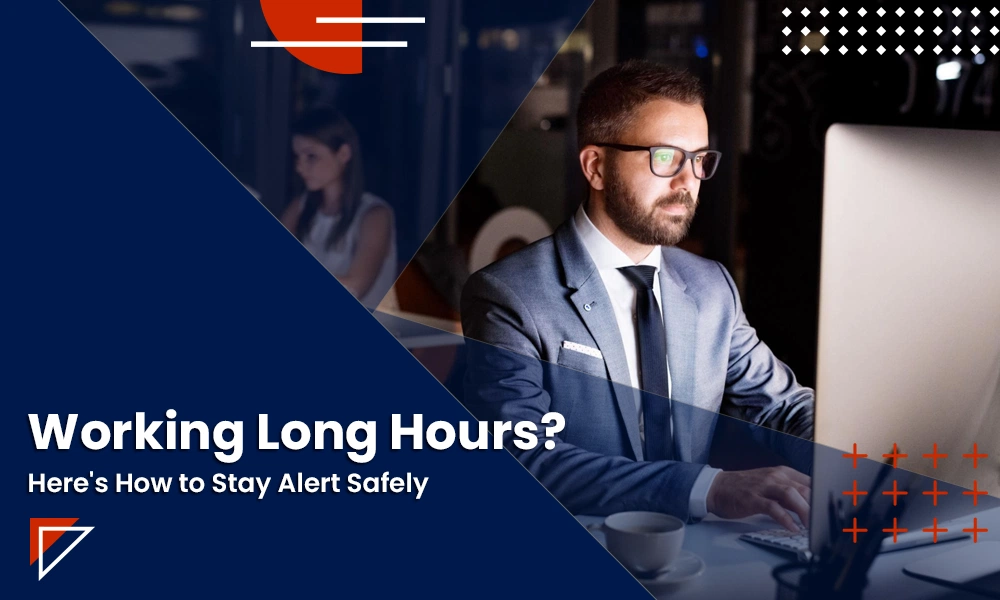
Have you ever reached the 4 pm mark during your work hours and your brain just checks out? In the background, the Windows shutdown music plays, and your brain has turned itself off. Your eyes may start getting heavier, you may find your concentrating drifting, and even simple work tasks feel like pushing a boulder up a hill.
Everyone knows the feeling. Staying awake during long work hours isn’t really about willpower, though that’s what most advice pretends it is. There’s a biological reason it hits around the same time every day too, usually early afternoon, sometimes late at night for people on odd shifts. The body’s alertness dips on a schedule whether anyone likes it or not. Fighting to stay awake during long work hours is basically fighting that dip, and coffee only wins for so long.
In this guide, we offer some lifestyle strategies that may help you stay awake and also discuss some medical treatments like modafinil or armodafinil that may help individuals out.
Role of Caffeine
Caffeine is the obvious answer, everyone reaches for it first. Works great for maybe three or four hours, then there’s a crash that’s arguably worse than the tiredness it was covering up.
Timing the coffee matters more than people think. Drinking it right when tired is actually late, caffeine takes 20 to 45 minutes to kick in, so by the time it’s working, the slump’s already halfway through. Some people drink it slightly before they expect to feel tired instead.
Also, too much caffeine late in a long shift just wrecks the sleep that’s supposed to happen after work, which then makes the next day’s staying-awake problem worse. It’s a loop. A bad one at that.
Role of Light
Bright light does more for staying awake than most people give it credit for. Offices with dim lighting or people working night shifts in low light are fighting an uphill battle without realizing why.
Stepping outside for even five minutes, or just sitting near a bright window, seems to help reset alertness for a bit. It doesn’t necessarily have a a huge effect, but not nothing either.
Moving your Body
Getting up and walking around helps more than another cup of coffee sometimes. Annoying advice because it’s so simple, but blood flow and alertness are linked in a pretty direct way. Sitting still for ten straight hours basically invites the brain to power down a little.
Doesn’t need to be a workout. Just standing up, stretching, and walking to get water are just small stuff that adds up over a long shift.
Power naps are the way to go
A 15-20 minute nap during a break can genuinely reset alertness for the rest of a long shift. Longer than that and there’s a risk of waking up groggier than before, which defeats the point.
Not every workplace allows this, obviously. Some cultures treat napping at work like a crime. Which is a shame because the science on short naps is pretty solid.
Food choices
Heavy carb-loaded lunches during a long work day tend to cause an afternoon crash that feels a lot like just being tired, but it’s really more of a blood sugar dip. Staying awake during long hours gets a lot harder after a huge plate of pasta at lunch.
Smaller, protein-heavier meals throughout the day seem to keep energy more level. Not a rule everyone follows, but worth noticing if the 2pm wall keeps showing up.
Constant sleepiness
Some people deal with this constantly, not the occasional rough shift, but a chronic inability to stay alert during work hours, no matter how much sleep they get beforehand. That’s usually a sign of an underlying sleep disorder, shift-work sleep disorder, or something like narcolepsy, and it’s worth talking to a doctor rather than just pushing through with more caffeine.
In those cases, doctors sometimes prescribe wakefulness-promoting medications specifically designed to help people stay alert during demanding hours. These aren’t the same as regular stimulants people casually take, and they’re only meant to be used under medical supervision, with proper diagnosis first. Self-medicating with prescription-only wakefulness drugs bought without a prescription is risky and not something to mess around with.
Role of sleep
Everyone knows that sleep is important, but people skip it constantly. No amount of trying to stay awake during long work hours fixes a rough night’s sleep beforehand. The tools mentioned, light, movement, and caffeine timed right only buy a little breathing room. They don’t replace actual rest.
Shift workers especially struggle here because their sleep schedule fights the sun. Blackout curtains, consistent sleep times even on days off, and avoiding screens before bed, all the usual sleep hygiene stuff still applies, it’s just harder to pull off with an irregular schedule.
Mental state
Boredom makes tiredness worse. Genuinely, a boring task during a long shift feels ten times more exhausting than an engaging one, even with identical sleep the night before. Alertness isn’t purely physical, there’s an attention component too.
Switching tasks, changing the environment slightly, or even just talking to a coworker for two minutes can nudge alertness back up. Doesn’t fix everything. Helps a bit though.
Final Thoughts
Realistically, staying awake during long work hours comes down to a pile of small things like light, movement, caffeine timing, decent food, and short naps if allowed. They should all be stacked together rather than one trick doing all the work. Some days none of it’s enough, and that’s just how it goes.
In some cases, individuals even avail themselves the help of pharmaceutical medications like Modalert 200 mg or Artvigil 250 mg that help them stay awake and focused during the daytime.
Frequently Asked Questions
1. What’s the fastest way to stay awake during a long shift?
2. Does caffeine stop working after a while?
3. Are naps actually helpful during work hours?
4. When should chronic tiredness at work be checked by a doctor?
5. Can diet affect how awake someone feels during work?

Dr. Liam, MD is a physician with special interest in cognitive enhancement, sleep medicine and neuropharmacology. With experience in reviewing scientific research and clinical evidence, Dr. Liam develops patient-focused content covering nootropics, wakefulness-promoting medications, attention, memory, mental performance, and neurological wellness. All content is written with emphasis on medical accuracy, patient safety and evidence based information.