
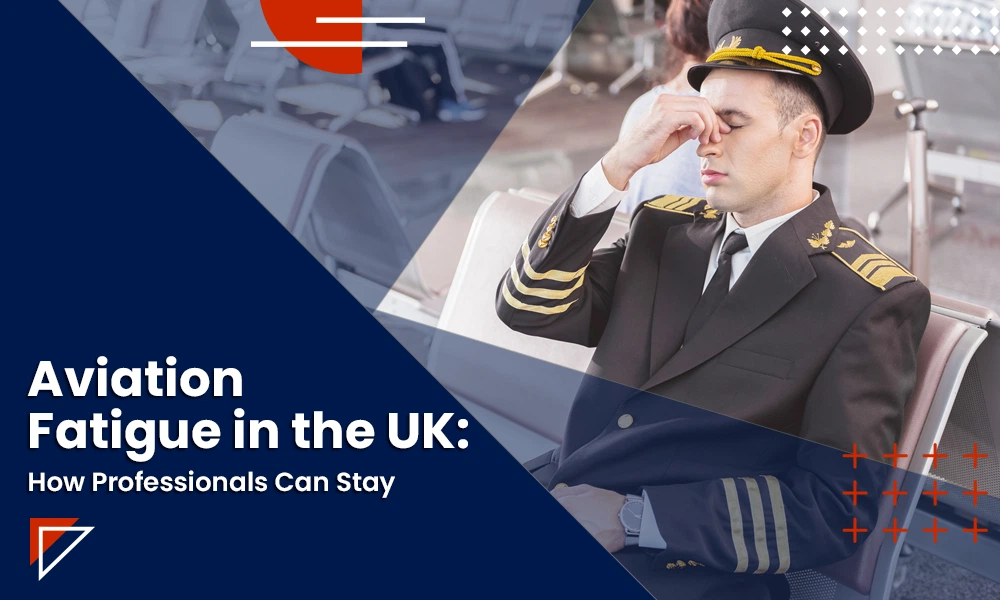
People talk about fatigue in aviation like it’s just “being tired,” but it’s usually messier than that. It’s the kind of tired that sits in your body even after you’ve slept. And if you work around planes, airports, schedules, delays, and strange hours, you already know sleep doesn’t always behave the way it should.
For Aviation professionals in the UK, this is one of those things that sounds obvious until it starts affecting your judgment, your mood, and even the tiny decisions you make without thinking. That’s where it gets a bit dangerous.
I think a lot of people still imagine fatigue as something you can push through with coffee and stubbornness. Sometimes you can, for a while. But then it catches up. Usually when you least want it to.
It’s not just “being sleepy”
There’s aviation fatigue, and then there’s that deeper kind of tiredness that shows up after early starts, late landings, broken sleep, and the weird rhythm of travel. It doesn’t always feel dramatic. That’s part of the problem.
You might notice slower thinking, irritability, or that strange feeling where you’re technically awake but not quite sharp. Some people call it pilot fatigue, others notice cabin crew fatigue, and it affects flight crew fatigue in general, even if the role looks different on the surface.
And yes, airline professionals in the UK deal with it constantly, sometimes without even naming it properly. They just call it a rough week, or a bad rotation, or “one of those shifts.”
Why the UK schedule makes it harder
There’s something about shift patterns that makes rest feel unreliable. Early report times, changes in duty hours, standby calls, delays that drag on, and back-to-back duties can turn normal sleep into a moving target.
That’s where aviation sleep health becomes more than a nice idea. It’s actually part of staying functional. Once sleep starts getting chopped up, the body can’t fully reset.
Then you get shift work fatigue, circadian rhythm disruption, and all the annoying side effects that come with them. The body wants one thing. The schedule wants another. That tension is basically the whole story.
Small warning signs people ignore
Fatigue doesn’t always dramatically announce itself. Sometimes it’s subtle, almost boring.
You reread the same line twice. You miss a simple detail. You feel oddly emotional over something minor. Or you get home and realize you can’t even remember part of the day properly.
That’s nothing.
Excessive daytime sleepiness can creep in, especially after sleep deprivation builds up over several days. And with long-haul flights, the body can feel even more thrown off because the time zone changes and the schedule doesn’t line up cleanly. Jet lag recovery takes longer than people like to admit, especially when the next duty starts too soon.
What helps, at least a bit
There’s no perfect fix, which is annoying but true. Still, some things help more than people expect.
Sleep consistency matters, even when the shifts are messy. If you can protect a few habits, the body has a slightly better chance of catching up. Blackout curtains, fewer screen checks before bed, and not treating every off-day like a chance to stay up late can make a real difference.
Hydration matters too. So does food, though people often ignore that part until they feel awful. Heavy meals at odd hours can make you feel sluggish, and being underfed is not much better.
And then there’s caffeine. Helpful, yes. Magical, no. It can mask tiredness for a bit, but it doesn’t solve the underlying problem. If anything, too much of it can make the sleep debt worse later.
The part people don’t say out loud
Sometimes the hardest thing is admitting you’re not actually okay to keep going. That’s awkward in a professional setting, especially in aviation, where everyone is supposed to stay composed and reliable.
But fatigue risk management is not about being dramatic. It’s about noticing when the body is sending signals and not brushing them off because the roster is tight or the day is long.
That’s easier said than done, I know. Still, people often wait too long. They push through one tired day, then another, and suddenly they’re running on habit more than alertness.
Why routines feel impossible but still help
I know routines sound a little fake when your schedule changes all the time. But even a loose routine can help anchor the day.
A few people do better with a fixed wind-down after duty. Others need a short nap strategy. Some rely on the same pre-sleep habits no matter where they are, hotel or home, because the brain likes familiar signals.
For Aviation professionals in the UK, that kind of consistency can be surprisingly useful. Not perfect, not dramatic, just useful. And sometimes useful is enough.
What employers should probably take seriously
A lot of fatigue problems get discussed as if they’re personal failures, which is a bit unfair. Yes, individual habits matter. But the working pattern matters too.
Roster design, realistic rest periods, and honest fatigue reporting systems matter more than people want to admit. If a system depends on workers constantly overriding exhaustion, it’s probably not a great system.
The point isn’t to make everything easy. Aviation is never going to be easy. The point is to make it safer, and maybe less punishing, which feels like a fair ask.
A simple example
Say someone finishes a late duty, gets a short sleep, then has an early report the next morning. They’re not just “a bit tired.” Their reaction time may dip, their patience may be lower, and the brain may be working with less margin than usual.
That’s the tricky part. Fatigue doesn’t always look serious from the outside. From the inside, though, it can feel like walking through glue.
A few habits that actually seem to stick
People often overcomplicate this stuff. Sometimes the basics are the only things that stick long enough to matter.
- Try to sleep in a dark, cool room.
- Keep caffeine earlier rather than later when possible.
- Use naps carefully, not randomly.
- Don’t ignore repeated signs of tiredness.
- Give your body a little buffer after overnight or long-haul work.
None of that sounds glamorous. But glamour is not really the goal here.
Why this isn’t going away
The weird thing is that aviation will probably always have fatigue as part of the job. The schedules, the pressure, the movement, the time zones, and the irregular rest all add up.
So the real question is not whether people will feel tired. They will. The real question is whether they notice it early enough to do something useful about it.
For Aviation professionals in the UK, that might mean speaking up sooner, sleeping more strategically, or just being a little more honest about how drained they are. Not in a dramatic way. Just honestly.
Frequently Asked Questions
1. What causes aviation fatigue?
2. Is fatigue common in aviation?
3. Can caffeine fix it?
4. Why is night work harder?
5. What’s the best quick fix?

Dr. Liam, MD is a physician with special interest in cognitive enhancement, sleep medicine and neuropharmacology. With experience in reviewing scientific research and clinical evidence, Dr. Liam develops patient-focused content covering nootropics, wakefulness-promoting medications, attention, memory, mental performance, and neurological wellness. All content is written with emphasis on medical accuracy, patient safety and evidence based information.