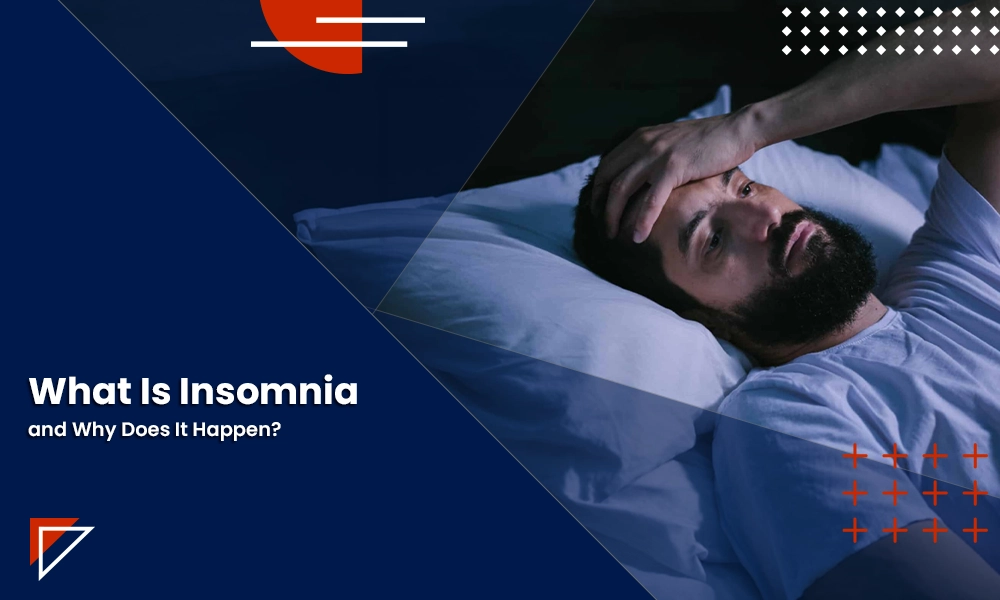
Insomnia is more than the occasional bad night where you scroll too late, wake up annoyed, and promise yourself you’ll go to bed early tomorrow. It is when sleep becomes difficult often enough that it starts following you into the day.
You may lie awake for ages. Or fall asleep, then wake at 3 a.m. and somehow become fully awake for no obvious reason. Some people wake far too early and cannot drift off again. It can feel random, although it usually is not completely random.
In simple terms, insomnia means not being able to get enough restful sleep despite having the chance to sleep. That can show up as difficulty sleeping, trouble falling asleep, trouble staying asleep, or waking up tired after what looked like a full night in bed. NHS guidance also notes that people may wake repeatedly, lie awake for long periods, wake early, and feel tired, irritable, or unable to concentrate the next day.
It is frustrating because sleep is supposed to be the easy part. You get into bed. You close your eyes. That should be it. But the mind does not always cooperate.
It is not always just “not sleeping”
Sometimes insomnia looks obvious. You barely sleep, you know exactly what is happening, and the next day feels foggy and long.
Other times, it is more subtle. You may sleep for seven or eight hours but still feel as though the night did not do much for you. That can point to poor sleep quality, especially if sleep is broken, restless, or filled with nighttime waking.
People often describe insomnia symptoms in ordinary ways:
“I’m tired but my brain will not switch off.”
“I wake up every night around the same time.”
“I sleep, but it does not feel like proper sleep.”
That last one matters. Sleep is not only about the number on the clock. It is also about moving through a normal sleep cycle and getting enough restorative rest.
A rough patch after a stressful week does not automatically mean a sleep disorder. Still, if it keeps happening and starts affecting mood, work, driving, memory, or daily functioning, it is worth taking seriously.
Why sleep suddenly gets complicated
There are many insomnia causes, and people often have more than one at the same time. That is part of why it can be hard to pinpoint.
Stress is a very common trigger. A deadline, relationship issue, money worry, health concern, family problem, grief, or even something exciting coming up can keep the nervous system on alert. This is the basic pattern behind stress and insomnia: the body is tired, but the brain behaves as if it still needs to stay watchful.
Then there is anxiety and sleep, which can turn bedtime into a strange mental meeting room. The quieter it gets, the louder thoughts can feel. You replay conversations. Plan tomorrow. Worry about the fact that you are not asleep. Then worry makes sleep even less likely. Not ideal.
NHS information lists stress, anxiety, depression, noise, an uncomfortable room or bed, alcohol, caffeine, nicotine, jet lag, and shift work among common contributors. Certain health conditions and medicines may also play a part.
Sometimes the trigger is obvious. A late coffee. A hot bedroom. A new baby. Night shifts.
Sometimes it is not obvious at all.
Short-term versus the version that lingers
Acute insomnia is the short-term kind. It may happen around a major life event, an illness, travel, exams, a work crunch, or a period of intense worry. For many people, it settles when life settles. Or mostly settles.
But sleep can become a habit in its own strange way.
After several bad nights, people may start going to bed much earlier, staying in bed longer, checking the time repeatedly, napping for hours, or trying every sleep trick on the internet at once. Completely understandable. Yet these changes can sometimes make the problem stick around.
That is when chronic insomnia may develop. The original trigger might have passed, but the fear and routine around not sleeping start feeding the issue. Bed becomes associated with effort, frustration, and clock-watching rather than rest.
It sounds dramatic, but this cycle is surprisingly common.
The everyday things that quietly interfere
A lot of sleep problems are tied to ordinary routines. Not because someone is doing everything wrong. Life is busy, screens are everywhere, and many people use the evening as the only time that feels like their own.
Still, a few patterns can matter:
- Caffeine late in the day can leave the body more alert than it feels.
- Alcohol may make someone sleepy at first but can disrupt sleep later in the night.
- Shift work, weekend lie-ins, and changing bedtimes can create irregular sleep patterns.
- Bright screens, noise, heat, light, and an uncomfortable mattress can all add to sleep disturbances.
- Long daytime naps can reduce the natural build-up of sleepiness at night.
The phrase causes of poor sleep is broad because sleep can be affected by almost everything: physical discomfort, a noisy neighbour, a late meal, a difficult email, hormonal changes, travel, or simply trying too hard to force sleep.
And then there is sleep deprivation. A few short nights can make people exhausted, but being exhausted does not always guarantee easy sleep. That feels unfair, but it happens.
When it may be something else
Not every person who sleeps badly has the same condition. Common sleep disorders can overlap with or resemble insomnia, and that is important.
For example, loud snoring, choking or gasping during sleep, or extreme daytime sleepiness may need medical assessment for sleep apnoea or another underlying issue. Restless legs, chronic pain, depression, menopause, thyroid problems, medication effects, and substance use can also affect sleep. NHS guidance specifically flags several of these possible contributors.
There are also insomnia risk factors that can make sleep more vulnerable: ongoing stress, poor mental health, chronic illness, pain, a disrupted schedule, stimulant use, ageing, and working nights or rotating shifts.
This does not mean every bad sleeper has a serious health problem. Usually, it means the whole picture matters more than one rough night.
Small changes can help, but do not force it
People sometimes expect healthy sleep habits to fix everything overnight. They can help, but they are not magic. And trying to make sleep perfect can become another thing to worry about.
A more realistic approach is to make sleep a little easier to happen.
Try keeping the wake-up time fairly steady, even after a bad night. Give yourself a wind-down period that is actually calming, not just “I am in bed with my phone while reading stressful news.” Keep the room dark, quiet, and comfortable. Reduce caffeine later in the day if you notice it affects you.
The NHS also advises going to bed when sleepy, keeping a regular wake time, allowing time to relax before bed, avoiding screens right before sleep, and avoiding alcohol, nicotine, tea, or coffee close to bedtime.
If you cannot sleep, lying there and fighting with it for hours may not be helpful. Some people do better getting up briefly, doing something quiet in low light, and returning to bed when sleepiness comes back. Not exciting. But neither is staring at the ceiling at 4:12 a.m.
A quick word about daytime sleep medicines
Insomnia and daytime sleepiness are not the same thing, even though one can lead to the other. If lack of sleep is affecting alertness, it is important to look at the cause rather than simply trying to push through it.
Armodacare 250 mg is generally used to promote wakefulness in specific medical situations not as a standard treatment for sleeplessness. It should only be used with appropriate medical advice, especially because stimulants or wakefulness-promoting medicines can affect sleep timing and may worsen existing sleep issues if used incorrectly.
Armodacare 250 mg should not be treated as a substitute for addressing the reason someone cannot sleep, whether that reason is stress, a sleep disorder, medication, work schedule, or another health concern.
If someone is regularly too sleepy to drive, work safely, or function normally, they should speak with a clinician. Tired driving is not something to “just manage.”
When it is time to get help
Insomnia deserves proper support when it becomes regular, distressing, or starts shaping the rest of life.
Consider speaking with a GP, primary-care clinician, or sleep specialist if:
- You have ongoing sleep difficulty for weeks or months.
- Daytime tiredness affects work, school, mood, concentration, or safety.
- You snore loudly, gasp in sleep or have breathing pauses.
- Pain, low mood, panic, medication, or alcohol/drug use seems connected.
- You are relying on sleep aids, alcohol, or stimulants to get through the cycle.
The goal is not perfect sleep every night. Nobody gets that. The goal is to stop sleep from becoming a nightly struggle
1. Is insomnia the same as sleeping less?
No, not really. It means not getting enough sleep, even when you have the chance to sleep
2. Can stress really cause sleepless nights?
Yes. But even when you’re tired stress can make your brain and body too alert to fall asleep.
3. How long does a short-term sleep issue last?
It depends. It may get better once the trigger, such as travel, illness or a stressful event, has passed.
4. Does alcohol help with sleep?
It may make you drowsy at first, but it can disrupt sleep later in the night.
5. Should I see a doctor for sleep trouble?
Yes. Especially if it lasts for weeks gets in the way of your everyday life or is associated with snoring, breathing pauses or severe daytime sleepiness.

Dr. Liam, MD is a physician with special interest in cognitive enhancement, sleep medicine and neuropharmacology. With experience in reviewing scientific research and clinical evidence, Dr. Liam develops patient-focused content covering nootropics, wakefulness-promoting medications, attention, memory, mental performance, and neurological wellness. All content is written with emphasis on medical accuracy, patient safety and evidence based information.